MTP 12F Male Type 1 Fiber Loopback Module, OS2 |
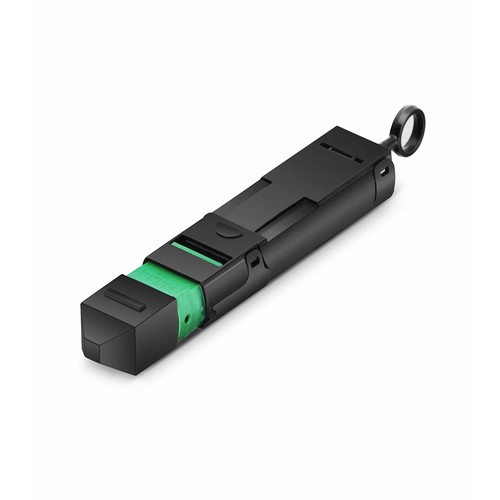 For UAE project teams, the key is to match this exact configuration to the port schedule, optical budget and delivery documentation. This fiber loopback module offers a self-contained optical route that returns the transmit signal directly into the receive link of the port under test: 12F, OS2, in a MTP setup. Plugged into the interface, it lets a single technician confirm transmitter output, receiver sensitivity and port map without a second device, a patch cord pair or a far-end loop. Product Highlights
Specifications
What loopback testing actually provesA loopback module closes the optical circuit inside one device: the transmitter launches light, this module returns it, and the receiver must lock onto its own signal. When the connection comes up clean under those conditions, the port has proven its transmitter power, its receiver sensitivity and its internal signal integrity in one step. It is the fastest way to distinct a bad port from a bad cable plant, because this cable plant is entirely removed from the test. Burn-in and production-line testingSwitch and transceiver manufacturers run loopback modules through thousands of insertion cycles on the production line: each port of each unit is exercised before this product ships. The insert-pull test rating on the module reflects that duty - the housing, latch and ferrule are built to survive repeated daily mating without the insertion loss drifting beyond its specification. Testing parallel-optics transceiversMTP-interface loopbacks serve the parallel-optics generations: 40G and 100G SR4-class ports on 8 fibers, 100G and 400G DR4-class ports on 12 and 16 fibers, and high-radix multimode interfaces on 24 fibers. This module seats in place of this trunk cable and returns each lane to its receiver, so a full port test takes seconds instead of a cable plant and a far-end partner. Male and female versions and when each is usedThe gender of the loopback must be matched to the port under test: transceiver interfaces with guide pins expect a female module, and pinned trunk-side interfaces expect the reverse. Using the wrong gender does not simply fail to latch - it may damage the guide pins, which are not field-replaceable. The gender is marked on the housing; review it against the port before each insertion. Type 1 fiber mapping and channel alignmentInside a multi-fiber loopback, the map decides which transmit lane returns to which receive lane. Type 1 map pairs the lanes in the order the optics expect, so every link of the port under test sees its own signal returned on the proper receiver. A wrong map produces crossed lanes, which looks exactly like a wiring fault and wastes hours of fault finding - the map is marked on this module so the test setup is unambiguous. Handling, wear and service lifeA loopback module is a precision test tool, and it stays one only while its latch, housing and ferrule survive daily duty. The insert-pull rating is generous, but it is not infinite: track the mating count in the test log, and retire a module that has served a production line for years before its wear becomes the hidden cause of failing ports. A worn latch that seats loosely adds loss that masquerades as a bad receiver - the cheapest instrument in the kit may waste the most expensive hours. A bench test workflow that scalesThe productive way to use loopbacks is a fixed routine: examine this module ferrule, mate it with the port, bring the interface up, record the per-lane status and the receive power, then unmate and cap this module immediately. With the routine fixed, a technician qualifies a full chassis of ports in the time an improvised setup spends on one line card. The consistency additionally makes the records comparable - the identical module, the identical process, the identical pass criteria across each site and each batch of hardware. Sparing and kit planningLoopbacks belong in each commissioning kit the way a known-good patch cord does. Plan one module per interface type per crew, plus a spare that stays sealed in its bag; the cost of an extra module is trivial against a truck roll to re-test a suspect port. Label every module with its interface, fiber count and attenuation so the right one comes out of the bag on the first try, and log its insertion count so a worn test tool never becomes the hidden cause of failing ports. Selecting the right loopback for the taskFour decisions define this module: this connector interface must be matched to the port under test, the fiber count must cover the lanes the optics use, the map type must pair the lanes the way the transceiver expects, and the attenuation must reflect the optical loss budget the test plan calls for. Getting all four right at order time is what turns a loopback from a drawer of adapters into a dependable instrument. When the need sits outside the standard configurations, the factory may verify a customized build - connector combinations, map variants and other attenuation figures are all manufacturable options. Quality Control and TestingEach loopback module is optically tested before packing: insertion loss of the entire loop is verified against the specification, and the ferrule end faces are inspected for scratches and contamination. This module ships with its dust cap fitted and the test result offered on specify. Ordering and Factory SupportRefer to the module by connector interface, fiber count, polish and attenuation when ordering a quotation. For other attenuation figures, map types or connector combinations, send the test need with the inquiry and the factory will verify the manufacturable specification. Our UAE project support can review the requirement with Shenzhen production before a formal quotation is issued. |
|||||||||||||||||||
Fiber Optic Cables
Fiber Optic Transceivers
Fiber Optic UAE supplies MTP 12F Male Type 1 Fiber Loopback Module, OS2 to data centers, ISPs and enterprises in Dubai, Abu Dhabi, Sharjah and across the Gulf region, with project support from our UAE office and production coordination from our Shenzhen factory.
UAE Fiber Optics
UAE office: Abu Dhabi,Al khaleej Al Arabi
Factory add: ZYT industrial area, Shiyan, Baoan district, Shenzhen, China 518000
Popular Products
- Fiber Optic Patch Cord
- Fiber Optic Pigtail
- Fiber Optic Attenuator
- Fiber Optic Patch Panel
- Fiber Optic Adapter